Sgt A.L.Sohl 12th infantry, Ivy Leaf Div.
#FirstPersonAccount
#dday80 #dday #Normandy #omahabeach #UtahBeach #OperationOverlord #WW2
No one had the power to think any other way. No one even looked back from where they had come from. Fear was present.
It was something like the wearing of too many clothes, like the weight of the rifle. It was there, and so it had to be tolerated.
There was no such word or thought of patriotism.
#DDay Minus One
My bunk was the 4th one- nearest the ceiling. It wasn’t quite long enough; Ray & Smitty joked about my length.
Somehow I doubled up and tried to get some rest.
About 3 in the morning a bell started to clang. All of us were wide awake, not knowing what to expect. The gun on our boat started to fire in steady ba-roomphs.
‘What the hell is it?’ Nemo asked tightly. None of us knew. Then the bell rings- all non-ship personnel must stay down in the hold.
We waited & sweated it out. All was quiet again- and gradually we tried to swallow the metallic taste in our mouths.
Bits of wreckage drifted by the waiting boats. The Navy guns spewed flame & smoke as they hurled their shells at the low murky land.
Gray barrage balloons attacked to low slung LCI’s blossomed from even beyond the dawn streaked horizon.
#dday minus one
Long, low LCI looking more like submarines chugged to within a 1/2 mile of shore. Sailors were rapidly lowering the tub-like LCP, which were carried by LCI’s & larger ships
Riflemen, machine-gunners, mortar-men & artillery observers made last-minute adjustments on their equipment.
They grinned nervously at one another. Their eyes seemed to say ‘this is it at last’, The men had been in training for a long time.
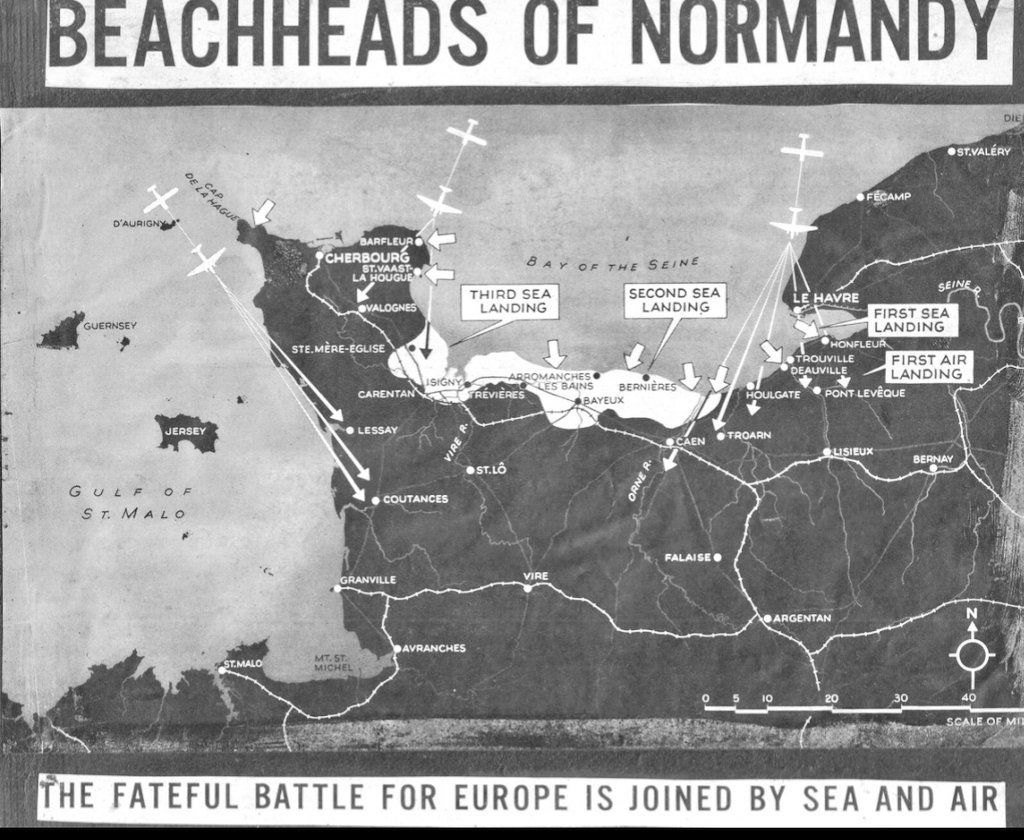
Some of the soldiers were darkly thoughtful & had even retained the small printed form letter that was given to them the night before. The Supreme Commander had written to the effect that this was what the world was waiting for & he knew he could count on them.
There were thoughts about what the folks at home would be doing just then.
They knew behind them the rest of the infantry waited aboard countless numbers of gray, gun bristling craft. LCI’s, LCT’s, LCP’s, LCM’s…
APA’s, British destroyers, cruisers, battleships. It was more like a huge boating party except to the fact that there were no sails visible.
Zebra striped friendly planes flew back & forth over the great regatta in orderly formation.
At 5 in the morning June 6th we went up on deck.
At 0600, the final confirmation came. The day was cloudy and cold. The staff officers looked at the day, shrugged. A sleepy colonel said: ‘Win, lose or draw – and there ain’t no draw- they can’t call it off now, thank God.'”
The first Flying Fortresses appears and, as the light grows, the obstacles on the beaches stand in the queer predawn pink that make dark things darker.
It’s cold and windy. The little LCI is bouncing up and down in the waves. Little Smitty is throwing up in the hold.
I am not feeling too good- but the sharp wind dispells the sickening feeling in my stomach. The morning is cloudy; way off in the distance, where a wan sun is trying to rise, we see gun batteries on the coast of France.
My feelings are of many fabrics. Like a young boy going to school for the first time – not knowing quite what to expect.
If it is possible, there are even more ships in view to the edge of the horizon. And past the horizon, we can see the balloons that are attached to more invisible ships.
Nearer, nearer- some men laugh
but it isn’t that of humor.
It is a steely tenseness, trying to find an outlet.
Destroyers and light cruisers are racing around near the shoreline, shooting & running through the choppy waves.
We are close enough to hear the guns of both sides now.
The batteries really can’t be seen, just the soundless flashes. Hot coffee is being served. Ray & I get some coffee & feel better.
We just watch the coast coming nearer. I know the first troops of our outfit are getting ready to land.
We hear the roar of planes. Hundreds upon hundreds of sleek pursuit jobs. Ours.
The planes are striped zebras so that we can recognize them.
I begin to see GI equipment; wreckages of LCP’s, lifebelts, odds & ends of impediments floating by us.
It is 10 AM. I can see by the shore line that we are headed for the wrong place. A month before this day, we had miniature replicas of the place we were supposed to land on. My mouth is dry. I try to crack a joke but can’t think of anything funny.
The hedgerows are little boxes of terror every inch of the way.
The first wave has landed. The shore, 2 miles away, doesn’t look like anybody is on it. “This is it,” I keep thinking.

Several LCP’s pull along side of our LCI. The swelling waves make it difficult to get into them. The navy pilot of the smaller boat yells for more blankets. That means there is wounded on the beach.
I strain my eyes but the beach looks calm and deserted. Smitty is sick and looking pale.
“Cheer up, Smitty. We’ll be on land soon.”
I try to sound light-hearted, but fail miserably. We check our guns and wait for the LCP to cast off.
The medics get their first aid equipment on at last. The motor chugs and we head for the beach.
Salt water, cold, slaps against the bow into my face. One of the medics tells us to check our guns again. We do, unconsciously.
Loaded and ready.
The sides of our boat are high and we can’t see over them. By standing on my tip-toes, I can peek over the top of the landing ramp. As we get nearer & nearer, my equipment begins to feel heavier & heavier.
A large water-proof map board is hanging on my left shoulder. My light pack, my entrenching tool, my bandoliers of ammunition, 2 grenades, a life-belt, first aid equipment, a small case of coded papers and orders hangs on my right shoulder.
I begin to make out a pitiful amount of figures on the barbed-wire strewn sand. Little Smitty keeps asking me what I can see.
“Sand, barbed wire, a couple of GI’s are huddled against a sandbank, a blown-up pill box…” I tell him.
Someone orders me to get my head down.
“GET READY” the coxswain shouts above the laboring engine.
He skillfully swerves our craft inland between the milling maritime traffic.
What I see before me is nothing but bleak, sandy hummocks along a narrow beach-line.

Sporadic explosions from inland artillery march along the water’s edge on invisible 7-league boots.
My heart is pounding faster. I still can’t see anyone on shore resembling our foe.
[Sohl is able to destroy the pillbox with a hand-grenade, saving many. He doesn’t include this in his journal.]

Planes zoom overhead, Ragged shards of black smoke from swift-moving destroyers drift across the chaotic scene.
“This is the end of the line!” the coxswain shouts above the din.
“MOVE YOUR ASSES. I GOTTA GO BACK FOR MORE.”
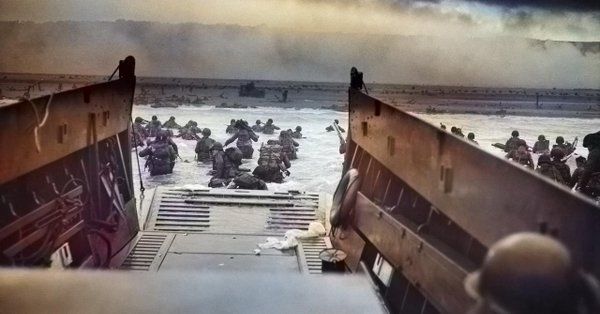
Amid all the pressures and increased adrenaline pumping through our veins there is no time for discussion.
Up front, I am the first to clamber down the lowered ramp & step off into cold water up to my neck.
Right behind me is little Smitty; his head is below the waves.
Sputtering & choking, he frantically reaches up and grabs my map case which bounds to the surface as an improvised raft.
“Hit your life belt!” I yell, following suit with mine.
There is a loud welcome hiss as the released gas buoys us above the waves.
Spike, our favorite mail carrier, doesn’t make it. He drowns by the weight of his own life saving equipment.
We watch him disappear below the depths of the orange-tinged water.
Crablike, we partially float & partially wade toward the beach, trailed by the rest of our thoroughly soaked group.
It is like trying to run in a dream- not being able to move quite fast enough.
From the shore comes the deafening sounds of shelling, rifle & machine-gun fire.
In the full light of day the beach looks like a great junk yard, sprinkled with body parts.
After the initial surprise of hitting the beach unharmed quickly wears off, we immediately begin to divest ourselves of our useless baggage.
First comes the life belts, then the gas-proofed fatigues, followed by the 2-lb can of unused anti-gas grease.
Finally, without any thought of future enemy potential we (perhaps) foolishly unfasten the thigh-clinging gas masks and deep-six them.
We are not alone in this massive ditching process. Our whole strip of Utah Beach is littered with govt-issue paraphernalia.
A shell whooshes by overhead. We dive into a nearby crater and bury our faces in the sand as it explodes farther down the beach.
The instinct to live is strong but there is a greater desire here.
One thought over-shadows all others:
Get Inland.
Move Forward.
There is an intense mixture of sound all about us but our senses don’t seem to register it.
The fear and noise has to be tolerated.
There are no idealistic thoughts of patriotism or courage. It is just: keep your head down & get the hell off the beach.
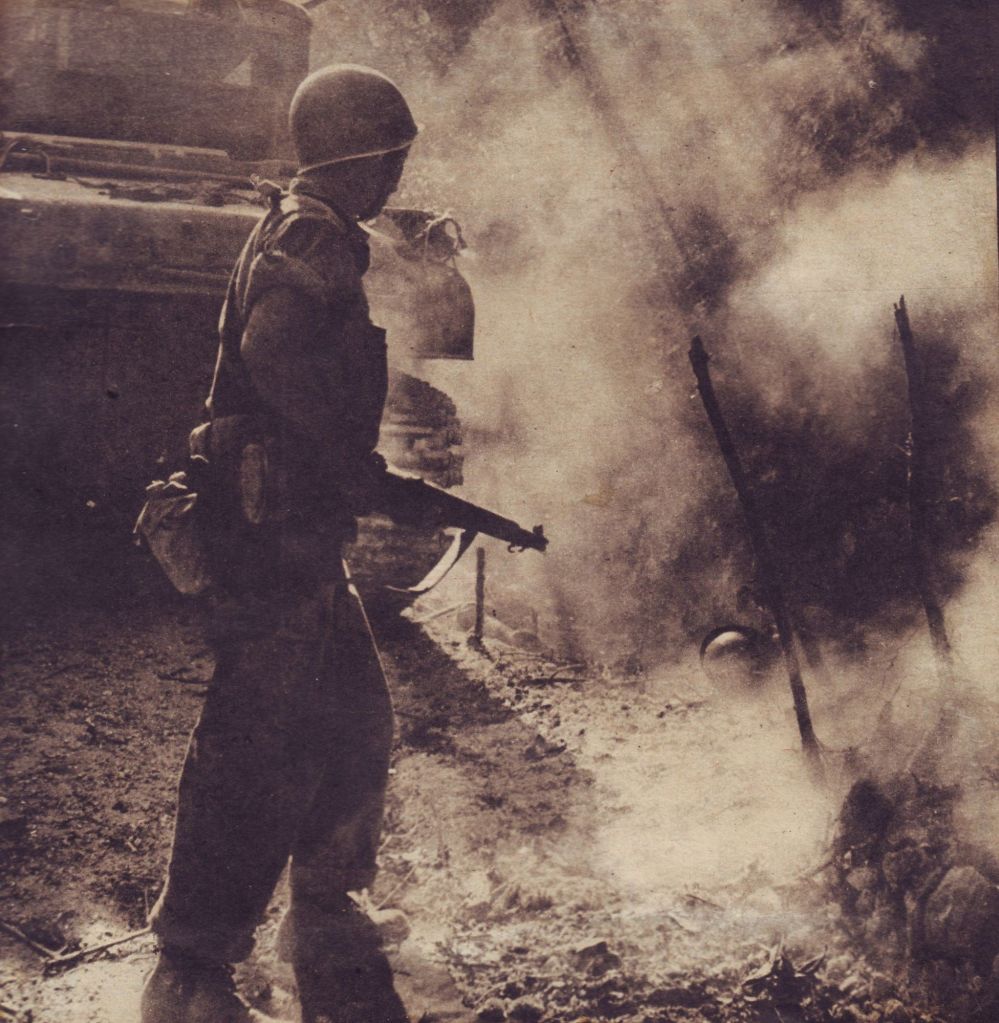
Now most of the beach is under shellfire. The intermittent hammer of machine guns makes another sector untenable, and only in two places can forces get through.
Forces are needed quickly – especially artillery & artillery observation planes; for it is inland from here that Rommel is expected to make his first counterattack.
We quickly form into small clusters and hasten over the dunes, ducking the shelling.
In spite of their noise and sharp sounds and our demolition charges on the beach; in spite of the wreckage and movement of men and machines across the beach- you could not fail to see the beauty of the scene to seaward.
The Channel is as blue as the Mediterranean, and as still.
In the blue, cloudless sky above float hundreds of silver barrage balloons, twinkling in the sunlight.

A bulldozer with its guts splattered over the sand, and another with its occupants spattered: an arm here, a leg there, a piece of pulp over yonder.
There are bodies & discarded things all over the beach: lifebelts, cartridge clips, canteens, pistol belts bayonets, k-rations.
By the afternoon of DDay, the battle of this beachhead is already the most desperate of the invasion.
About 100 yards from the water, we come upon a narrow, dirt-banked causeway leading inland. It seems to skirt a broad, marshy area.
Small white placards on poles are scattered intermittently along both sides of the road.
Trhe signs ominously warned: “Achtung! Minen!”
For the edification of the nonlinguistic, there is a crudely drawn death’s head alongside the German words.

Our choice is to either chance the road and alleged mines, or attempt to wade across a formidable looking swamp, where there could be hidden machine gunners lurking or other obstacles we can not possibly anticipate.
In a wide, deep tank ditch half full of water is the casemated German 88 that had caused much of the wreckage.
A clean shell hole through the steel shield of its narrow opening showed how it had been put out of action.
The Germans set up machine-gun positions atop the bluffs; these, with ingeniously concealed batteries, are raking landing parties.
Casualties of the assault forces are high.
Some drown, some are impaled on obstacles, blown by mines, shattered by shellfire…
and stranded by the ebbing of the tide.

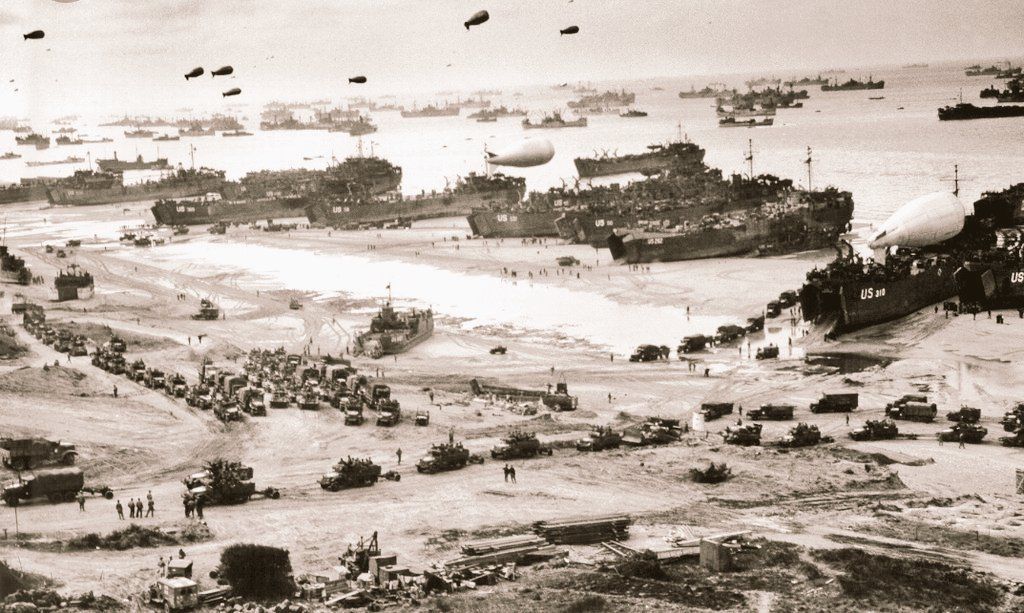
From the bluff, I can see beyond the beach almost 12 miles to sea, and all this expanse of water is filled with boats.
There are, by a quick rough count, 665 vessels lying offshore, from the large transports on the horizon to the small LCs near the beach.
About 5 miles out lay the cruisers & battleships, pumping salvos of high explosive into the enemy batteries inland.
A column of men and vehicles follow the narrow dusty road twisted up from the beach to the bluff.
A German machine gun continues to fire.
Beside the road, a single soldier lay full-length on his face, his arms stretching above his head in an attitude of repose, a bullet hole through the top of his steel helmet.
Then, we spot footprints on the embankment side of the road from troops who had gone before us.
Gingerly, in the narrowest single file we can manage, we follow the footsteps, while listening to the machine guns’ burp and the heavy bullfrog clump of mortars amid the sharp cracks of rifle fire from off in the woods.
Much to our relief, we are not seeing tangible signs of the enemy. We walk on eggs like this for 2 miles, sweating every step of the way.
The hedgerows are terrifying. The Germans could be just on the other side, and you would never know until it was too late.
It is at the hedgerows, in some deep grass alongside a cow path that we come upon another casualty. A dead American soldier, lying grotesquely on his side.
His helmet is askew, and he is still clutching his M-1 rifle. A thick, hardened crust of dried blood forms a dark red mask where his face had once been. His trousers & underwear are down below his knees.
Obviously, he had been in the process of relieving himself when a stray fragment of shrapnel brought a profane ending to his last living act.
Our thoughts are grim & sober as each of us passes by him.

There, overlooking the beautiful seascape with its twinkling balloons, is a cluster of large mass graves and near them are men digging fresh ones.
Behind the bluff to the right is a hastily built field hospital, where the slightly wounded are laying on the ground before the tents.
The smell of ether crosses the road.
There are several French women working in the tents, but they are too busy to talk.
There are bright red poppies & some yellow flowers in the field near the hospital, but dust was beginning to cover them over.
Behind the hospital is a barbed-wire enclosure, already packed with prisoners of war.
Nearly 500 had come in by Wednesday afternoon, and more were on their way down from the forward units.
Most of them are under 20 or over 40; they are well-fed, well-shod, and fairly well-clothed; and all wanted water.
A German captain explains to a guard that they have been drinking local water for 2 to 3 years and see no reason to wait for the chlorinated water the Americans drink.
The guard gives the captain a drink. Many of the men are not Germans, but Poles and Balts and Russians, who had been put there to die in the first assault while the crack German divisions assembled further behind.
But the officers are all German. All of them look stolid & resigned; even the youngest ones seem to have lived longer than their captors.

We reach the start of farmland, or bocage, replete with barns, stone houses, hedgerows & apple trees.
We run upon a farmer hiding.
Hot & thirsty, I give him my canteen to fill. He disappears for a while and comes back with it, filled with something that tasted like fire.
It was calvados, a fiery French applejack brandy. We didn’t know what it was, & we were sure we were being poisoned, so we threw it away.
Along with the small farms, we encounter a few big chateaus, too. Every main room has a barometer and a big clock.
Our GIs just shoot them to pieces, in a combination of nerves, fear, and anger. The anger is at seeing these huge chateaus, which have gone unscathed while the poor little farmers suffer. The château’s occupants had been Nazi sympathizers.
There are lots of GIs looting in château’s, and who can blame them?
I grab a couple of beautiful leather-bound books.
At one point, I also get a German carbine, which I lug with me all over the country.
Later, I will use it to bribe an officer aboard the Sea Bass for a merchant marine friend trying to get his dog on board for the trip home.
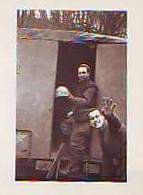
After a while, we begin to see some 82nd Airborne Division paratroopers straggling in after being scattered everywhere.
They were rugged-looking guys- my GOD, they were something!
What had saved their butts were those little cricket clickers.
Meanwhile, we take some German prisoners. We are supposed to escort them back for interrogation. Nobody is up for doing that.
Some GIs take the Germans back in the hedgerows, and we hear a couple of shots.
We know what has happened.

The hedgerows are little boxes of terror every inch of the way.
We manage to find a small road and make it to the clearing that passes for headquarters.
Snipers keep firing on us.
With every little “zip,” we duck.
Officers stand there with their maps, talking, scared to death & trying not to let on.
A minute or so later, another zip! We go after the snipers but never find them. They are out there in those apple orchards, up in the trees. As it is June, there are still leaves on the trees, so they have good cover.
Once we are linked up, our first mission is to take Cherbourg. We need Cherbourg so we can ship in more ammo.
There are 4 more pillboxes in the middle of the bay. They are named something like North, South, East, West but in French.
In one of them is a switchboard that controls all the mines in the harbor.
We have a large 155mm howitzer blasting away at point blank range but even so, we can only knock out a few chips at a time.
By *chance, our artillery manages to hit a German hand grenade, causing a sympathetic detonation.
It ruins the mine-control equipment and saves the day.
[*SOHL TAKES OUT PILLBOX WITH HIS GRENADE, fails to mention. Medal received]

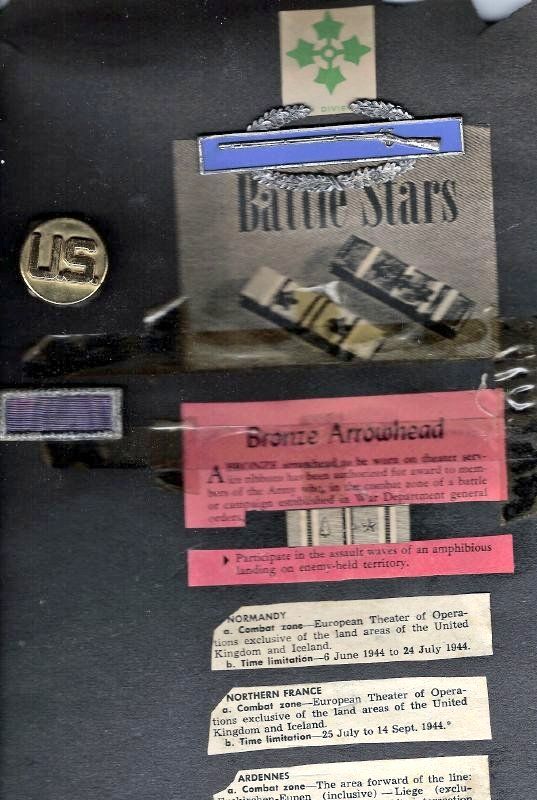
My left ear rings for weeks after we blast those pillboxes with the 155s.
Amazingly enough, even with all the danger, there is at least one man along “just for the ride.”
President Theodore Roosevelt’s son, Brig. Gen Theodore Roosevelt Jr., is attached to our unit.

He joins us after we land at Normandy.
Brigadeer General Roosevelt Jr., then in his mid-50’s, was a sort of good-time, roly-poly type fellow.
Traveling with him is his “dog robber,”as we used to call them. Some high-ranking officers had dog robber attendants who served as valets & gofers. These men would run and get their chow for them. Roosevelt, however, goes to the chow line.
Roosevelt wants to be seen as “one of the boys” and almost gets us all wiped out.
Roosevelt does not and would not observe phone security.
He grabs the phone and yaks to Major Gen. Raymond O. Barton at division HQ.
He never uses the code words, mentioning our position location.
“We’re about 200 yards from” such & such.
As soon as we hear him spilling our position, we look around for trenches to dive in and hide.
Sure enough, a few minutes later, the German Nebelwerfer rockets opened up on us. They sound just like a hound dog when they come in.
The bombs strike with such tremendous concussion that they can damage your brain from quite a distance.

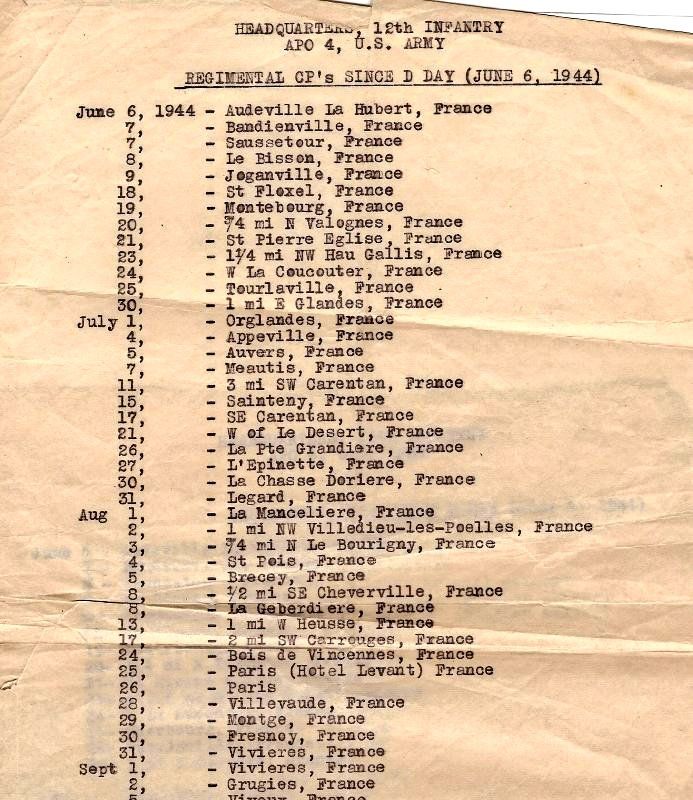
Midway in this journey of life
I was aware of
Straying in the darkened den.
Ah- tongue cannot describe the boredom that
Bestrode my heart.
Here in this parched land- all fathers
Were slobbering simpletons
Blown hither and yon by foul gales
Of canned laughter.
Sgt. A.L.Sohl, 4th Infantry, 12th Division, Ivy Leaf Division
Operation Overlord June 6th, 1945
#DDay
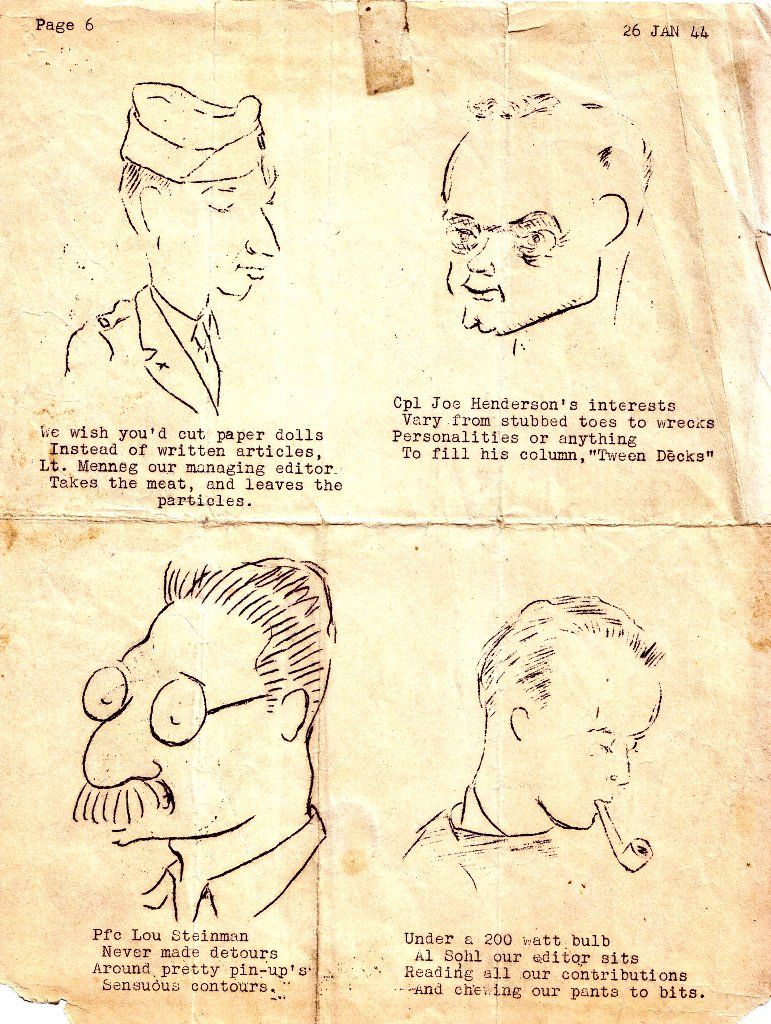
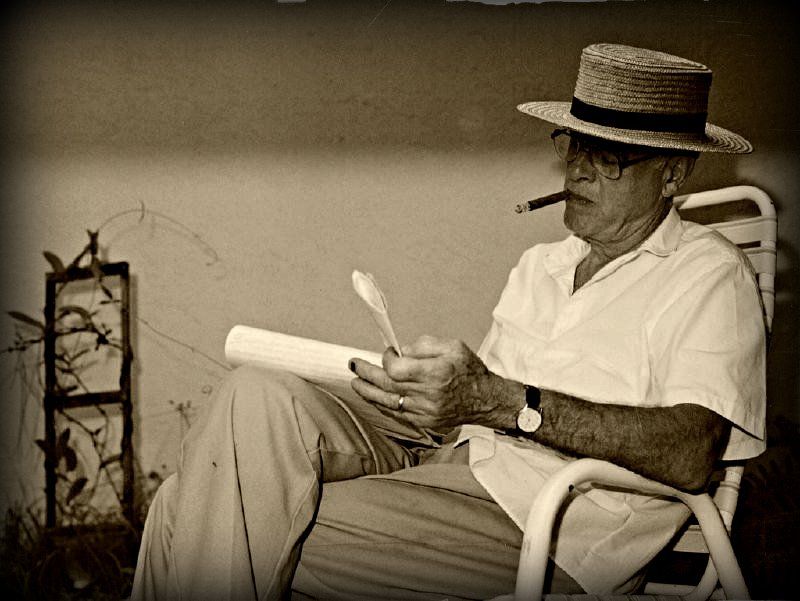
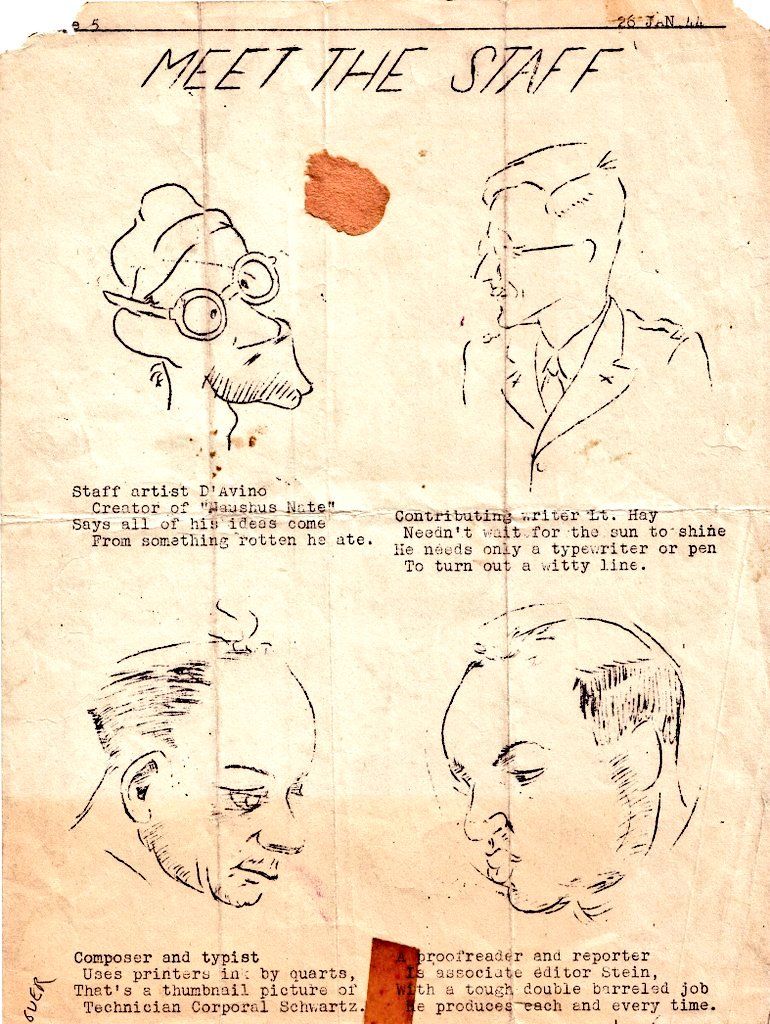
Regional Command Posts From D-Day, June 6, 1944 to May 8,1945 12th Infantry 4th “Ivy Leaf” Division #DDay75 #DDay #WW2 #Normandy
Sgt A. Lincoln Sohl – Company Historian
A smile, a kiss, a warm glance from a pretty miss;
A tear, a sigh, must there be parting from e’en this?
A thousand doubts torment the mind;
A song, a poem, an incomplete memory,
A girl and home, a soothing reverie…
And yet-seeming so far behind. -A.L.Sohl, France #DDay
Until you’ve felt
The ground trembling
In the dripping
Darkness of night;
Until you’ve seen
Bearded men weep
And beat the earth
With futile fists;
1/4
Until you’ve heard
The sighing rustle
Of Man-flung steel
passing overhead;
Until you’ve tasted
Ashes in your mouth
And thought about
Mad, unrelated things;
2/4
Until you’ve lived
Like a hunted beast
In a damp hole
Afraid of the night;
Until you’ve smelled
The sticky odor
Of rotting men
In nearby fields;
3/4
Until you’ve known
Hunger and filth
And weariness beyond
Wordly standards;
Where Death is God,
And Hate is common prayer.
4/4
– Sgt. Albert Lincoln Sohl
#DDay80 #Normandy #WW2 #DDay


 The Longest Day